
Skip to content
21 Solutions

Link Biosciences Case Study

How Link Biosciences Scaled Custom Nutrition From Manual Work to Thousands of Orders Per Day

Link Biosciences runs a specialized personalized-nutrition business that ready-made software could not handle. We learned their formulas, production process, and machines firsthand. We built Sigma to connect customer rules, orders, batching, and production. The same senior team still supports new needs.

About 5 minutes. No sales call required.

Built with Link Biosciences, a B2B operational engine for companies offering personalized supplements.

~300 → 1000s

Daily orders software supports (up from manual limits)

~1,200

Orders routinely processed for a single customer in one day

Portal

Customer visibility into formulas, orders, production, and shipping

Ongoing

Long-term support as needs change

With a second production machine online, daily capacity reached nearly 2,000 orders. That throughput reflects both software and added hardware.

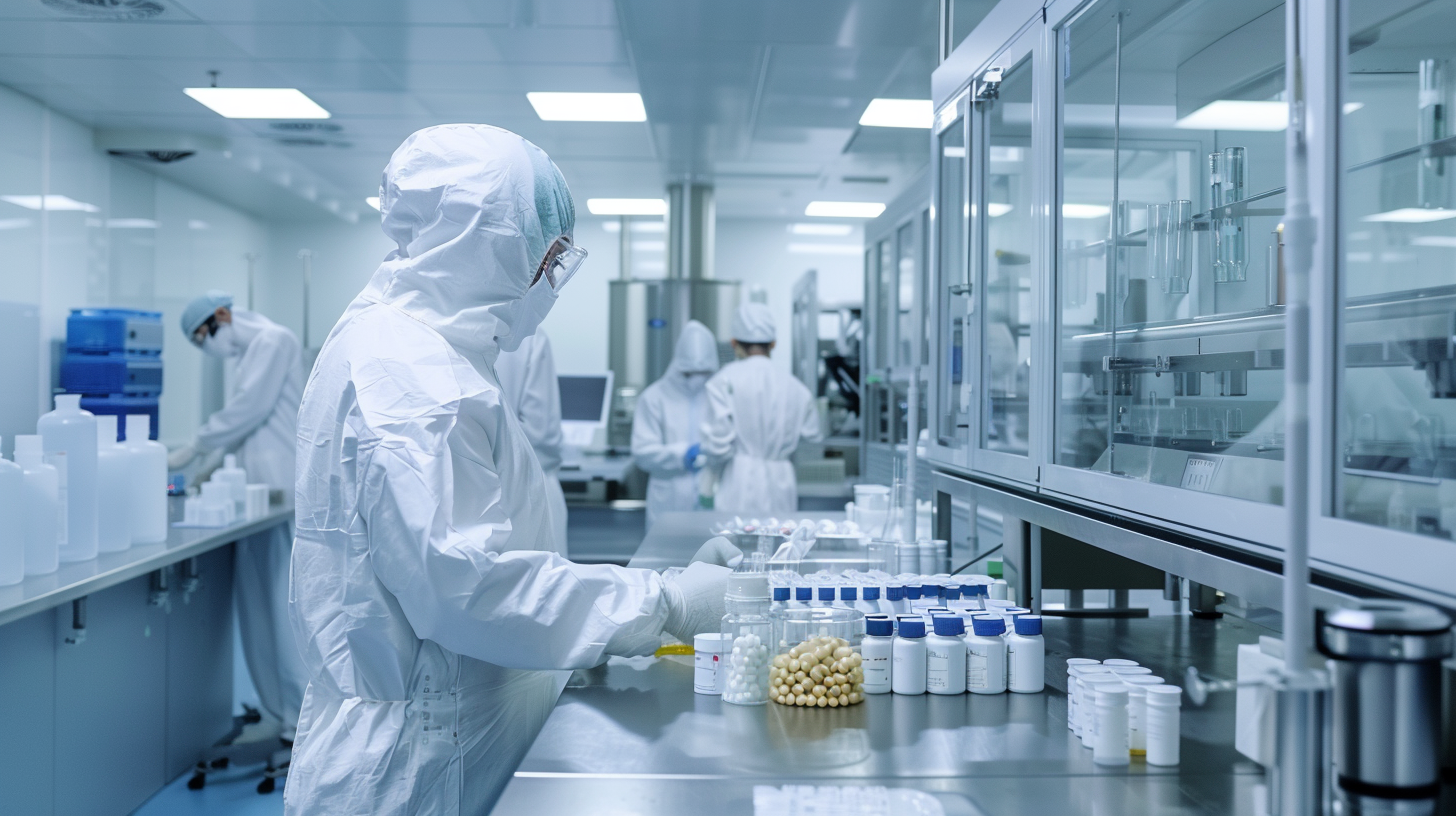
Technicians in cleanroom gowns producing personalized supplements alongside labeled bottles and capsules in a controlled production environment

Client snapshot

Client

Link Biosciences — a B2B operational engine for companies offering personalized supplements.

Industry

Custom nutrition / personalized supplement operations.

Challenge

Highly custom formula and fulfillment workflows could not grow through manual steps and generic tools.

Solution

A custom software platform — Sigma — connected to specialized production hardware and customer-facing workflows.

Outcome

Higher throughput, better visibility, order management that can scale, and continued support as the operation changes.

The challenge: a custom business stuck in manual systems

Link Biosciences’ work is unique because every client can use different data and formula rules. Depending on the customer, the system may need DNA data, gut biome data, lifestyle surveys, custom recipes, and production limits — then turn all of that into an exact personalized formula and a real production order.

Before Sigma, the business held that complexity together with manual steps and tools that did not connect.

Microsoft Access databases holding key operational data.

Spreadsheets used to track customers, orders, and formulas.

Manual clean-room documentation for production.

A generic system that needed heavy ongoing support.

A lot of programmer support just to keep the process running.

Manual ingredient weighing and batching on the production floor.

Disconnected customer, order, and formula tracking.

Labor-intensive workflows that were hard to track and costly to scale.

The problem was not missing software. None of the software understood the business.

The old process could make about 300 orders per day — but it took a lot of manual labor and overhead. The limit was not ambition. It was the manual, broken-up system underneath.

Why off-the-shelf software wasn’t enough

Link Biosciences was not a standard online store or fulfillment business. It was a custom formula engine. A generic platform could not easily account for the reality of how the operation actually worked.

Different customer data sources
Different client requirements
Formula creation logic
Production batching
Hardware integration
Customer visibility
Operational exceptions
Complex, client-specific rules

“For a business this specialized, software needs do not arrive ready-made. You discover them by understanding how the operation works.”

The 21 Solutions approach to custom operations

First understand the operation. Then decide what to build.

21 Solutions did not wait for perfect specs. Through Sergei Golimbievsky’s work, the team got close to the operation, learned how the business actually ran, and built software around the real workflow — not an ideal version.

  • Spent time understanding the existing manual process before writing code.
  • Learned how formulas were created and what drove each personalization decision.
  • Learned enough about the DNA-based formulation process to build the right system around it.
  • Understood the production hardware and the data it needed to run correctly.
  • Connected customer requirements, order management, formula logic, batching, and production.
  • Iterated quickly with the Link team as new operational realities emerged — rapid, just-in-time iteration and real-time operational support.

“Sergei took the time to understand the process, the user, the formulas, and the machine. That made him different from other developers.”

Debbie, Link Biosciences

The tech choice followed understanding the business: connect customer rules, formula logic, production batching, and hardware in one system built around the way Link actually works.

The solution: Sigma

Sigma is the software platform 21 Solutions built for Link Biosciences. It became the central system connecting work that had depended on manual handoffs, spreadsheets, Access databases, and workarounds.

Customer and order management
Formula creation workflows
Personalization based on data
Client-specific rules
Production batching
Integration with Eugene production hardware
Customer portal access
Formula visibility
Order tracking, production, and shipping transparency

Sigma gave Link Biosciences one system connecting work that had previously depended on manual handoffs, spreadsheets, Access databases, and workarounds.

The results

Throughput

From ~300 manual orders to thousands supported by software

Previously about 300 orders per day through manual production workflows. Sigma supports thousands of orders per day from a software standpoint, with production limited more by hardware and staffing than the software itself. The team has routinely processed around 1,200 orders for a single customer in one day; with a second machine, capacity reached nearly 2,000 daily orders.

Speed

Formulas generated on order entry, batched for production

Manual production and documentation once took a lot of time. Now formulas are generated as orders enter Sigma, then batched for production. Batches can move through production in minutes, with a batch often containing hundreds of orders.

Customer visibility

A portal instead of spreadsheets

Customers previously relied on spreadsheets and less clear processes. Now they can log into a system, view formulas, see order progress, monitor production status, and track shipping.

Flexibility

Support for many personalization models

The business was once limited by rigid systems and manual workflows. Link Biosciences can now support different types of clients — including those using DNA, gut biome, survey-based, or recipe-driven personalization models.

Continued involvement

The team stayed as needs changed

21 Solutions still supports new needs with the business and system knowledge gained through the original work.

Unified operation

One system instead of fragmented tools

Sigma connected customer data, formulas, orders, batching, and production — replacing a patchwork of Access databases, spreadsheets, and manual handoffs with one central system.

Throughput at the highest volumes reflects both Sigma and added production hardware capacity. Production still involves staffing and hardware, and is not fully automated end to end.

The team stayed involved as the operation became more complex

As Link grew and leadership evaluated its systems and outside relationships, the internal team pushed to keep 21 Solutions involved because future changes depended on both the system and the business knowledge behind it.

When new leadership considered reducing the external development relationship, the internal recommendation was straightforward: continued growth and change required people who already understood the operation. 21 Solutions kept learning, talking with leadership, and delivering.

This is a normal part of leadership evaluation. In this case, it reinforced the value of the partnership rather than replacing it.

“For a custom process, you get custom problems. 21 Solutions understood how to work outside the box.”

Debbie, Link Biosciences

Why continuity matters here

  • The team understands the operation, not just the code.
  • Domain knowledge lives with the people who built the system.
  • New needs can be met without re-learning the business from scratch.
  • Growth and change become an advantage, not a risk.

Before and after Sigma

Before

  • Manual, fragmented processes across Access, spreadsheets, and a generic system
  • Around 300 orders per day, with heavy manual labor
  • Manual ingredient weighing, batching, and clean-room documentation
  • Disconnected customer, order, and formula tracking
  • Limited customer visibility
  • Hard to track, expensive to run, difficult to scale

After

  • One platform — Sigma — connecting the operation
  • Software that supports thousands of orders per day
  • Formulas generated on order entry, then batched for production
  • Integration with Eugene production hardware
  • Customer portal for formulas, orders, production, and shipping
  • Flexibility to support DNA, biome, survey, and recipe-driven models
  • Long-term support from people who understand the operation

Does your business process need more than ready-made software?

If your team relies on spreadsheets, manual workarounds, disconnected systems, or software that does not match how the business actually operates, 21 Solutions can help you turn that complexity into a system that scales.